The Peace Dividend: Paths Not Taken

In an era of overlapping crises, it is hard not to indulge in some "what if" scenarios. There is one moment in particular that serves as a critical inflection point-a juncture in history that could have changed our current politics if only a different path was taken. I am talking about the post Cold War peace dividend-now a long forgotten part of our political discourse.
The peace dividend is the added investment in social spending that was set to arrive upon the end of the Cold War. Given the dissolution of the Soviet Union, the need for massive military budgets was seen as redundant by much of the political class as well as the general public. The American taxpayer that had dutifully financed tanks, jet fighters, submarines, and nuclear warheads would finally see their money invested back into their crumbling roads, failing schools, overburdened hospitals, dilapidated neighborhoods, alongside a host of other needed spending priorities. Obviously, none of this happened.
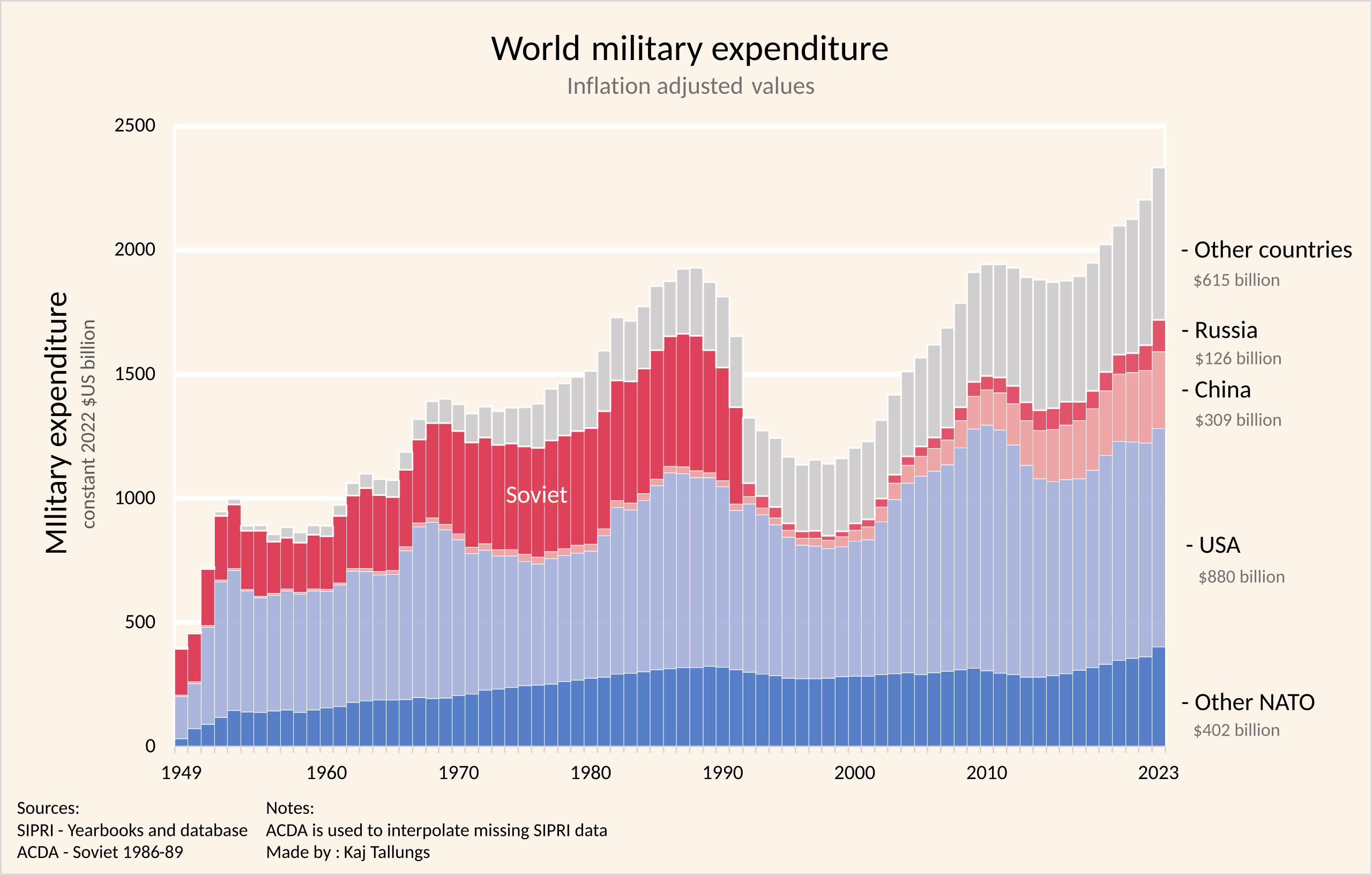
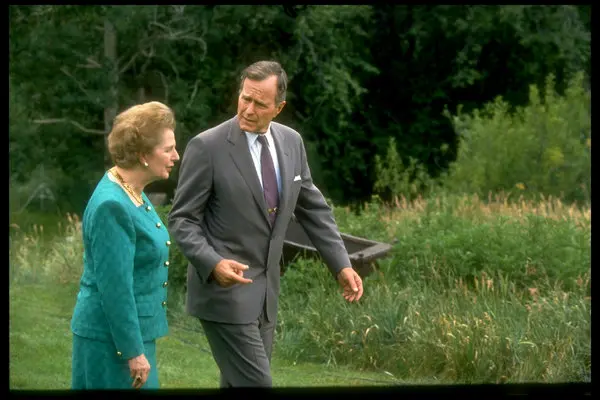
Despite the promises of politicians like George H.W. Bush of the United States and Margaret Thatcher of the United Kingdom, military budgets in the Western world did not decrease. While military budgets exploded after 9/11 and the ensuing war on terrorism, the interim period between the dissolution of the Soviet Union and the attack on the World Trade Center did not see significant declines in defense budgets or corresponding increases in social spending. Why was this the case?
By the 1990s, defense industry firms has so embedded themselves within the local economies of the United States, any talk of decreasing military spending was unthinkable. Almost all of the 435 Congressional districts have some defense agency jobs located within. This makes any attempt to cut back such spending enormously risky from a political standpoint. These same defense firms have ever present lobbying organizations in Washington D.C. to make sure they continue to keep the pressure on elected officials. The pressure defense industry lobbies were able to bring to bear on domestic politics forestalled any chance of a peace dividend from ever occurring. As a result, the American people suffered from decades of failing schools, crumbling infrastructure, and staggering healthcare costs. The failure to turn the dreams of the peace dividend into reality is a burden we all bear to this day-a shared experience of creeping social collapse in the United States of America.


